Rupin Pass Trek Experience: The Summit We Never Reached
Three weeks after Spiti, I was back in the Himalayas. This time, the adventure was on foot for our Rupin Pass Trek Experience. We didn’t reach the summit, but the journey taught me more than I had expected.
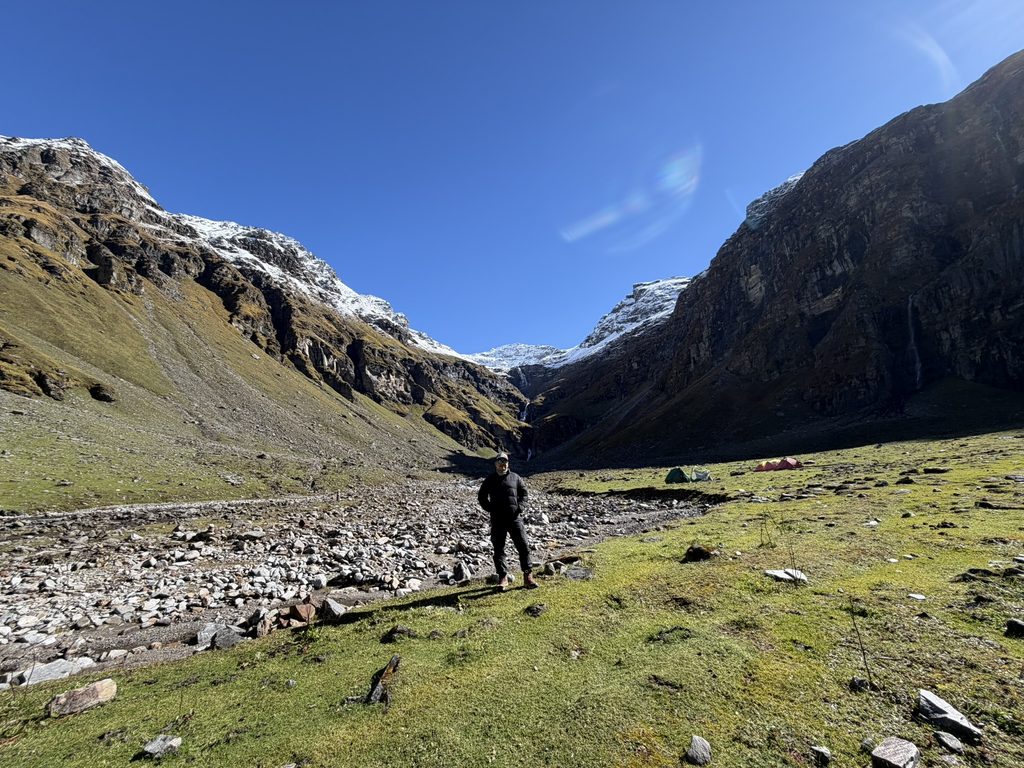
Rupin Pass Trek: The Summit We Never Reached, and the Lessons We Brought Home
My Rupin Pass Trek Experience began as the third major adventure of my 2026 travel year. First came the Chitkul motorcycle expedition, followed by Spiti expedition, and barely three weeks later, I was preparing for a six-night trek through the Himalayas.
Our reporting point was Shimla, and the trek was scheduled to begin on 26 September 2026. Rather than travelling directly to the reporting point, three of us decided to leave Delhi on 24 September and spend a night in Shimla.
For one of my colleagues, it was a first visit. For me, it was a chance to revisit a place where my professional journey had begun back in 2002, straight out of college.
Some journeys are about discovering new places. Others are about reconnecting with old memories. Before the trek began, a nostalgic day in Shimla gave me time to revisit places connected to my past.
My Rupin Pass Trek Experience Begins in Shimla: A Walk Down Memory Lane
We took a Himachal Tourism Volvo from Delhi and reached Shimla around 7:30–8 AM the following morning. After a short local bus ride and a pickup arranged by our hotel, we settled into a small property just behind Christ Church on the Ridge.
I had stayed there twice before, and its location and value for money made it an easy choice.
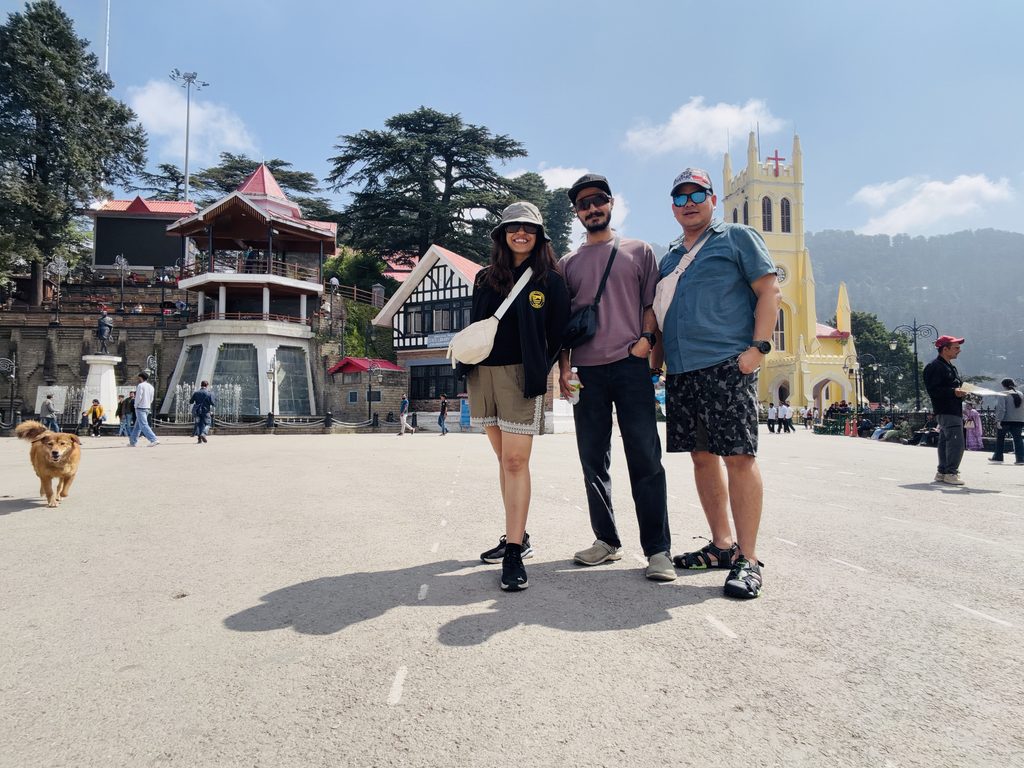
After breakfast, we headed out for a walk. Fortunately, the crowds were unusually thin, allowing us to enjoy Shimla at a relaxed pace. For the first time in years, I managed to go inside Christ Church, something I had never properly done during my earlier years in the city.
The Mall Road has changed considerably since 2002. What once felt more authentic and unhurried has become increasingly commercialised, although a few old establishments still retain their character. Seeing Ta-Tung, the handmade leather shop, and its familiar presence was a lovely reminder of the past.
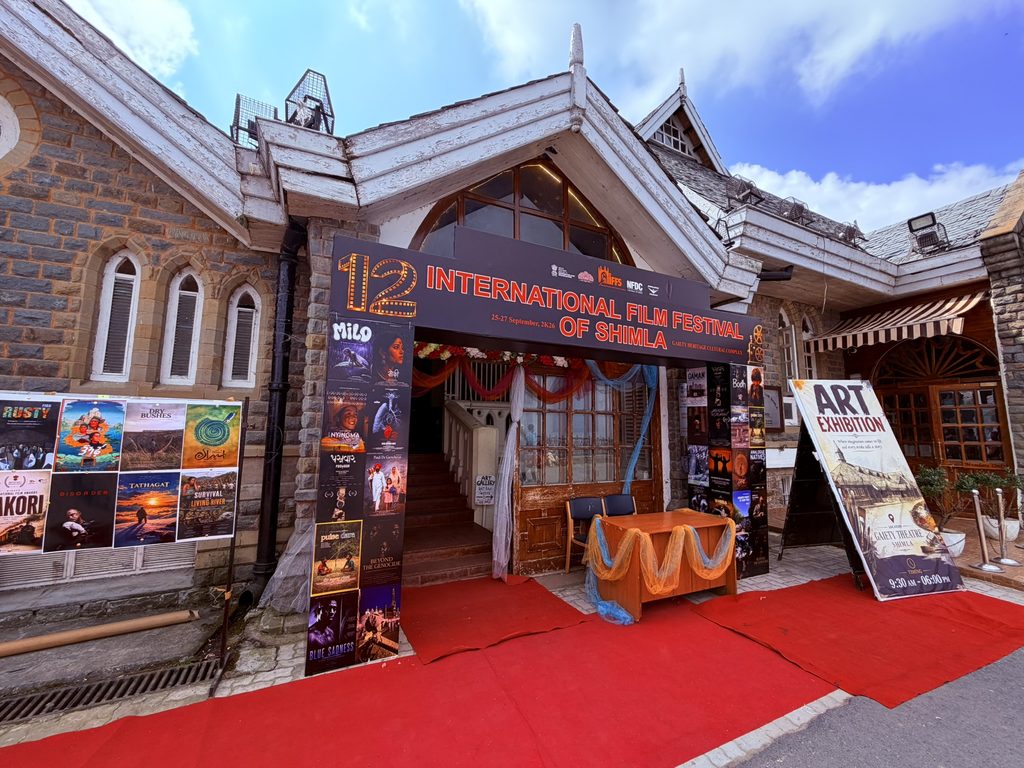
We also visited the historic Gaiety Theatre, where the Shimla International Film Festival was taking place.
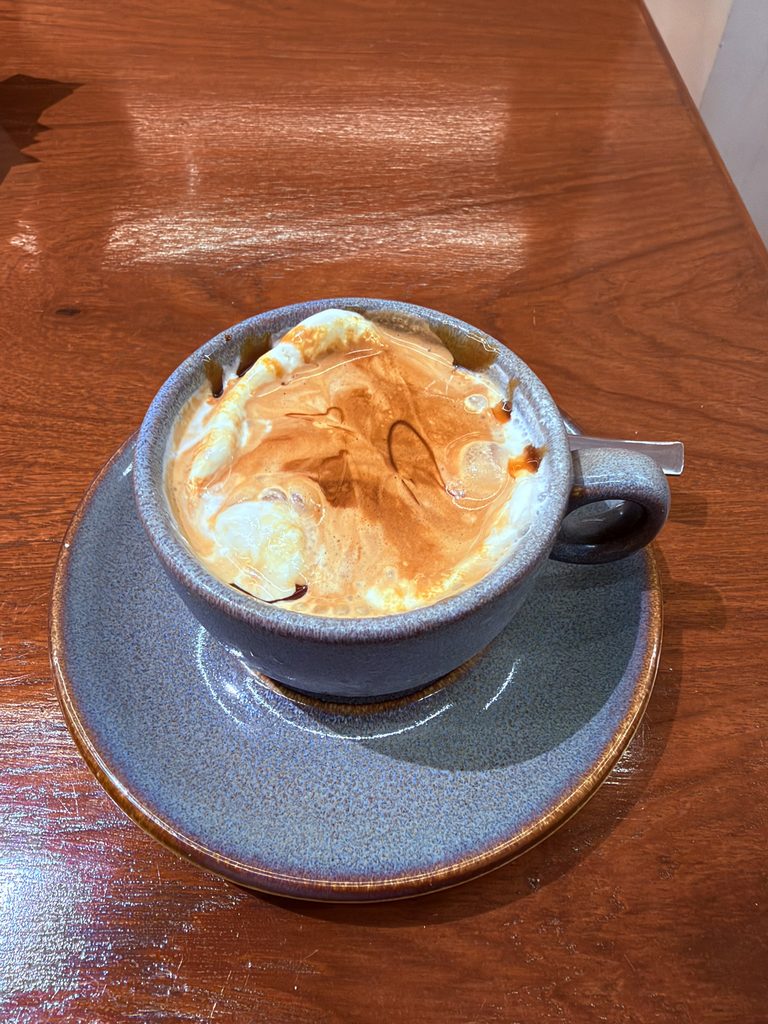
Our next stop was Trishul Bakery, a popular social media recommendation. Honestly, we all felt it was a little overhyped. The real surprise came at Café 1873, where I tried their signature 1873 Affogato for the first time. It was a lovely coffee-and-dessert experience.
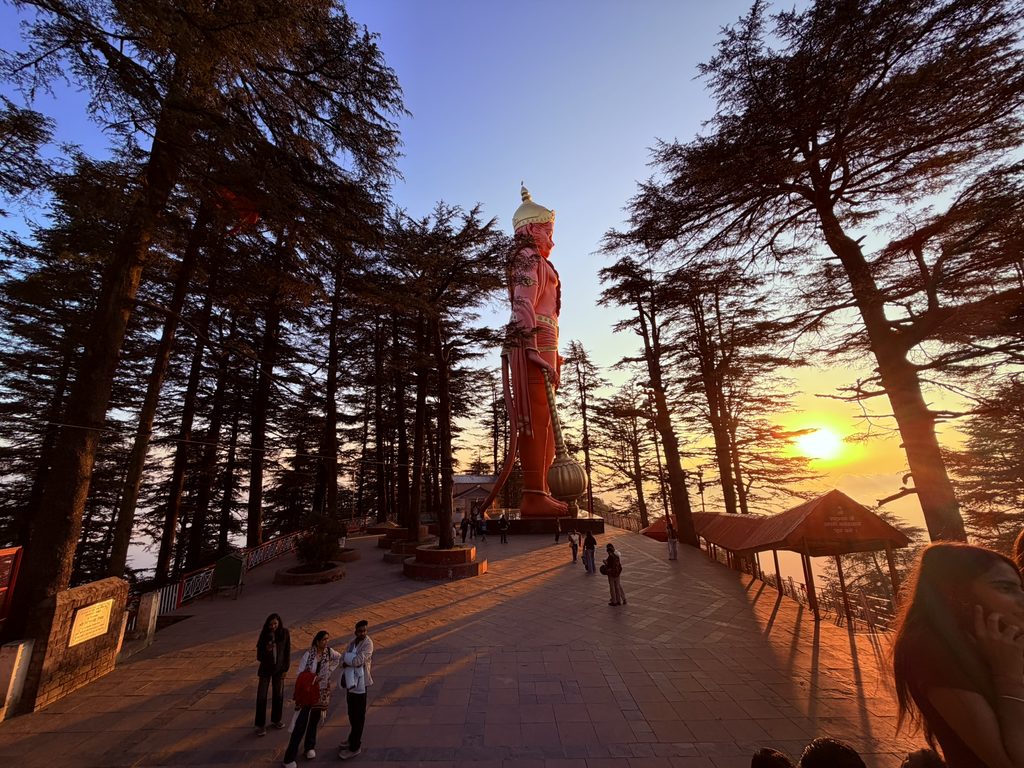
In the evening, we hiked up to Jakhoo Temple, dedicated to Lord Hanuman. The uphill walk took around 40 minutes, a good warm-up for the trek ahead. This was the point when my Rupin Pass Trek Experience started to test both my fitness and patience. We arrived in time to enjoy the sunset and evening aarti, surrounded by chanting and the peaceful atmosphere of the temple.
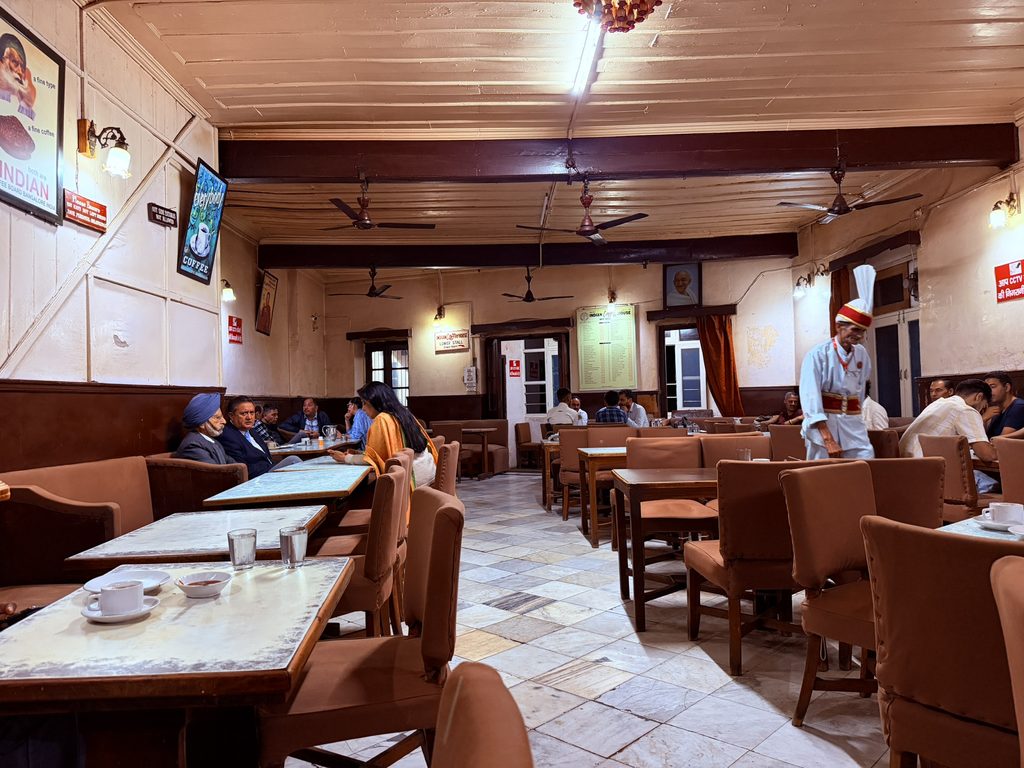
We ended the day at the iconic Indian Coffee House on the Mall Road. The coffee may not be the best in town, but the old furniture, familiar faces, reasonable prices, and timeless atmosphere make it worth visiting.
After dinner at the hotel, we packed our bags and went to bed. The next morning, we would head into the mountains.
The Journey to Jiskun: Our First Surprise on Rupin Pass Trek Experience
On 26 September, we reached the old Shimla bus station by 7:30 AM. We had been told to expect a group of around 16 trekkers, but to our surprise, there were 28 people travelling in two tempo travellers.
We had booked through one company, only to discover that another local operator was handling the actual trek.
We eventually left around 9 AM, delayed by late arrivals. The drive was beautiful, but the atmosphere inside our vehicle was not quite what I had imagined. Most of the group were in their early twenties, with loud music and constant chatter. We tried to go along with the mood, even joining in with some songs, but I had hoped for a quieter journey into the mountains.
After multiple stops, rough roads, rain, and a particularly uncomfortable final stretch, we finally reached Jiskun around 9 PM. A journey that had taken almost the entire day was over.
Even then, we had to walk another 300–400 metres in the rain because the vehicle could not go further. Opening a 60-litre backpack to find a jacket and then put on a raincoat was an adventure in itself.
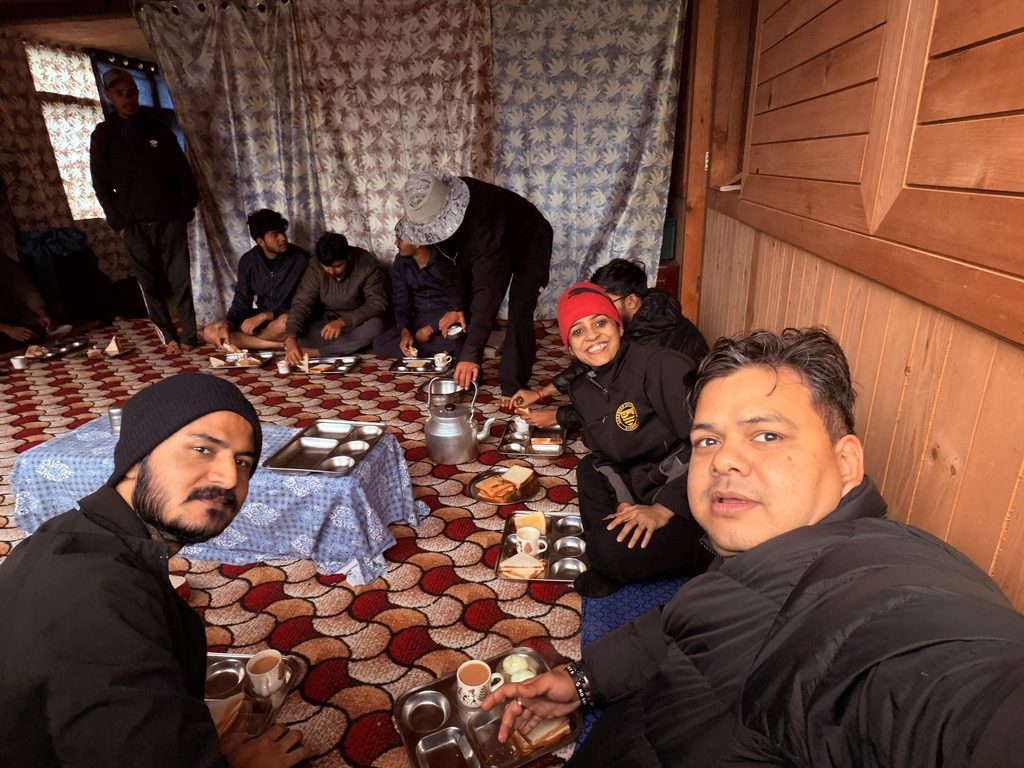
Jiskun, at approximately 7,600 feet, was our base for the trek. Our accommodation was a basic wooden-style property with limited facilities and just two toilets for around 30–40 people. Forget comfortable showers; even using the toilets required planning and patience.
The food, however, was simple, warm, and perfectly adequate. We had tea on arrival, followed by dinner, and prepared for the real challenge ahead.
The Challenging Trail to Jakha Hanging Village
On 27 September, we began our trek towards Jakha, located at approximately 8,755 feet.
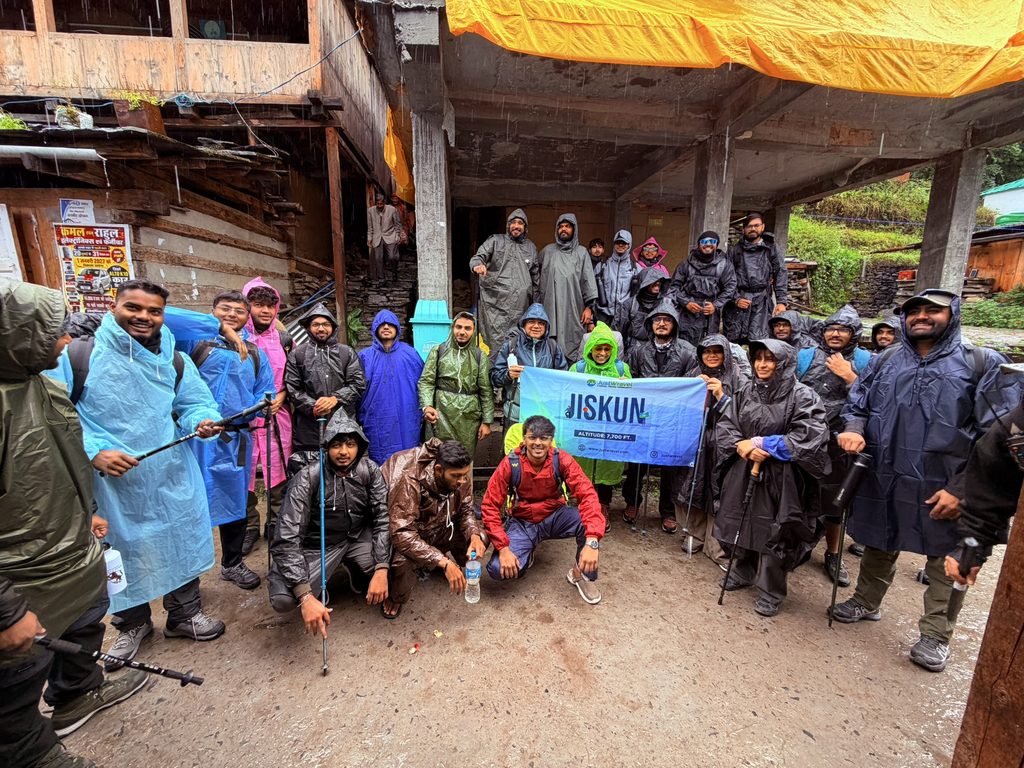
On paper, the elevation gain looked manageable. On the trail, it was a different story.
It had been raining, leaving the path muddy and slippery. Some sections were steep enough that we had to help one another negotiate the descent, while loose rocks and narrow stretches demanded constant attention. A small water crossing was made easier by a man-made bridge, but the climbs that followed were demanding.
For me, there was another challenge: I was carrying a fully loaded backpack weighing around 15–20 kg. It was my first experience trekking with that much weight over difficult terrain, with everything needed for the six-day expedition on my back.
We stopped several times, huffing and puffing our way forward. Yet the views made every pause worthwhile. Clouds seemed to touch the mountain slopes, and a river flowed through the valley below.
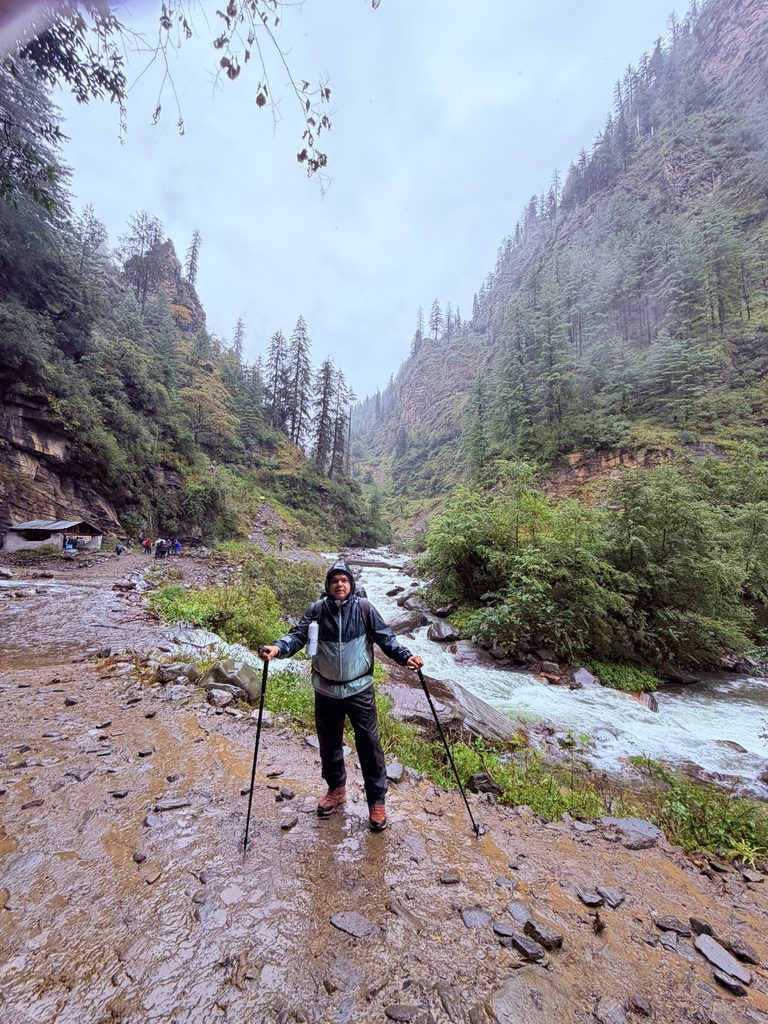
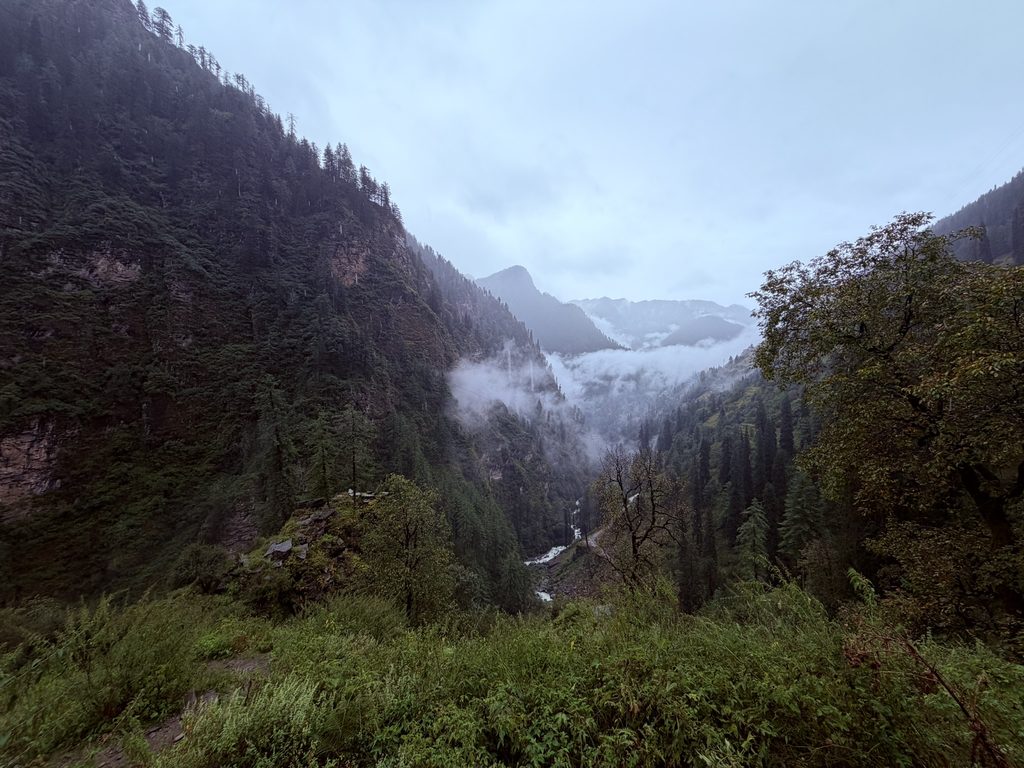
Eventually, we reached Jakha around 1:30–2 PM.
Jakha: The Famous Hanging Village
Jakha is famously known as the Hanging Village, with its traditional houses appearing to cling to the steep mountainside. After the muddy trails and demanding climbs, reaching this remote Himalayan settlement felt like an achievement in itself.
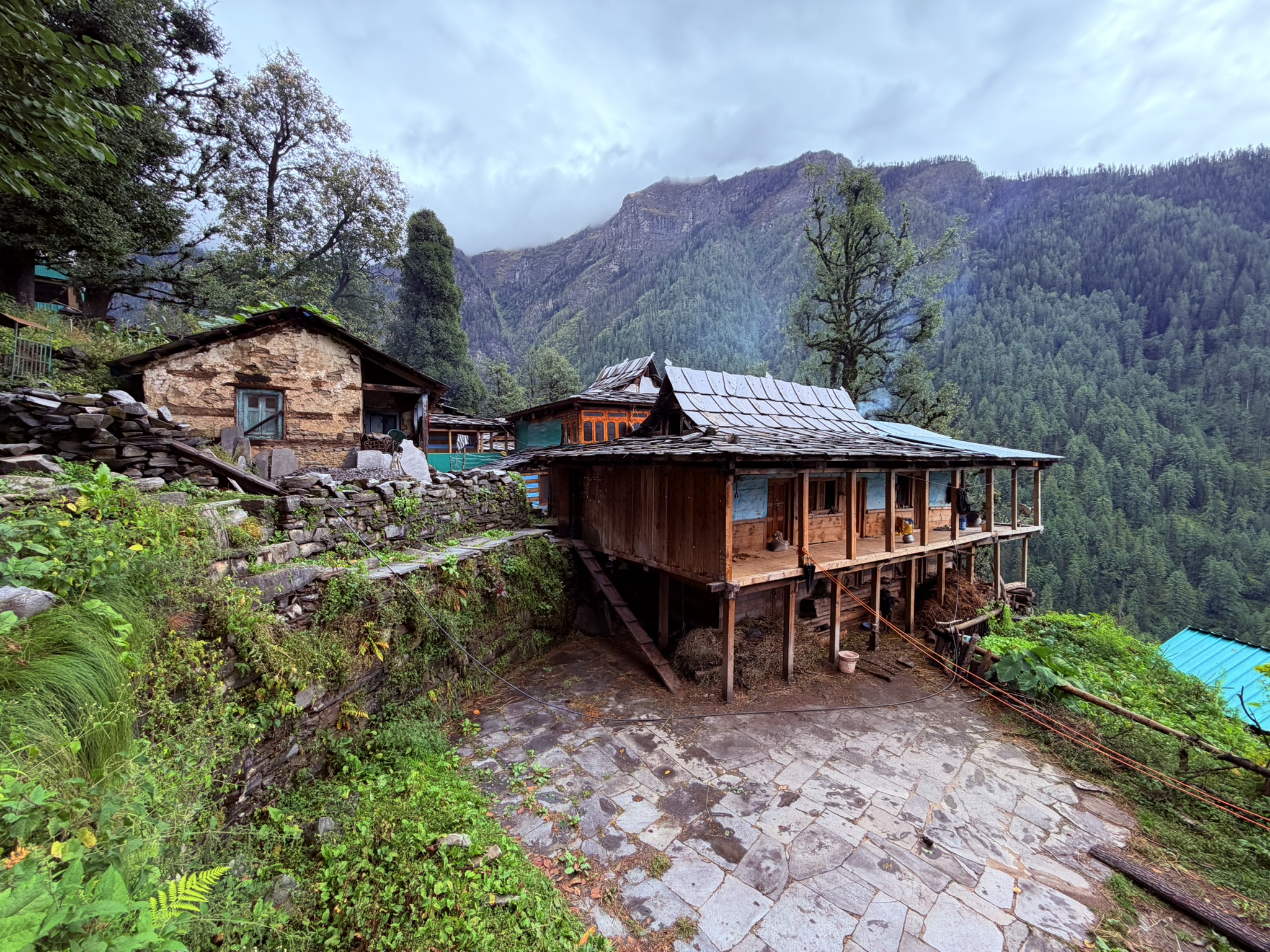
The village was beautiful, with mountain views, colourful houses, and a quiet rhythm of life far removed from the bustle of Delhi.
Our accommodation was a simple mountain house and, as we understood it, the last place on our route with access to electricity.
Lunch was rice and dal. Throughout the trek, the food followed a straightforward routine: hot breakfast, rice and lentils for lunch, chapatis for dinner, and welcome cups of tea in the afternoon.
The rain intensified after we arrived, keeping us indoors for much of the day.
According to our original plan, the next morning we were supposed to trek approximately nine kilometres to Dhanderas Thatch, gaining around 3,000 feet in elevation. We expected to camp there without electricity.
Little did we know that Jakha would become our home for two nights.
When the Weather Changed Everything
That evening, the rain continued, accompanied by darkness and lightning. We were eventually told that we would remain in Jakha the following day because the weather higher up was deteriorating.
On 28 September, we woke up hoping for a delayed start, but the reports from ahead were not encouraging. We heard that some trekkers had returned because of snowfall in the upper reaches. There were also reports of sheep being stranded and rescue efforts underway.
The difficult part was the lack of clear communication from our own trekking team. Much of what we learned came from local people and other trekkers rather than our guides.
With no trek planned, we explored the village. We visited Dhara Temple in Dhara village, although it was closed when we arrived. The villagers explained that access to the inner temple was restricted to local residents, reflecting the importance of their traditions.
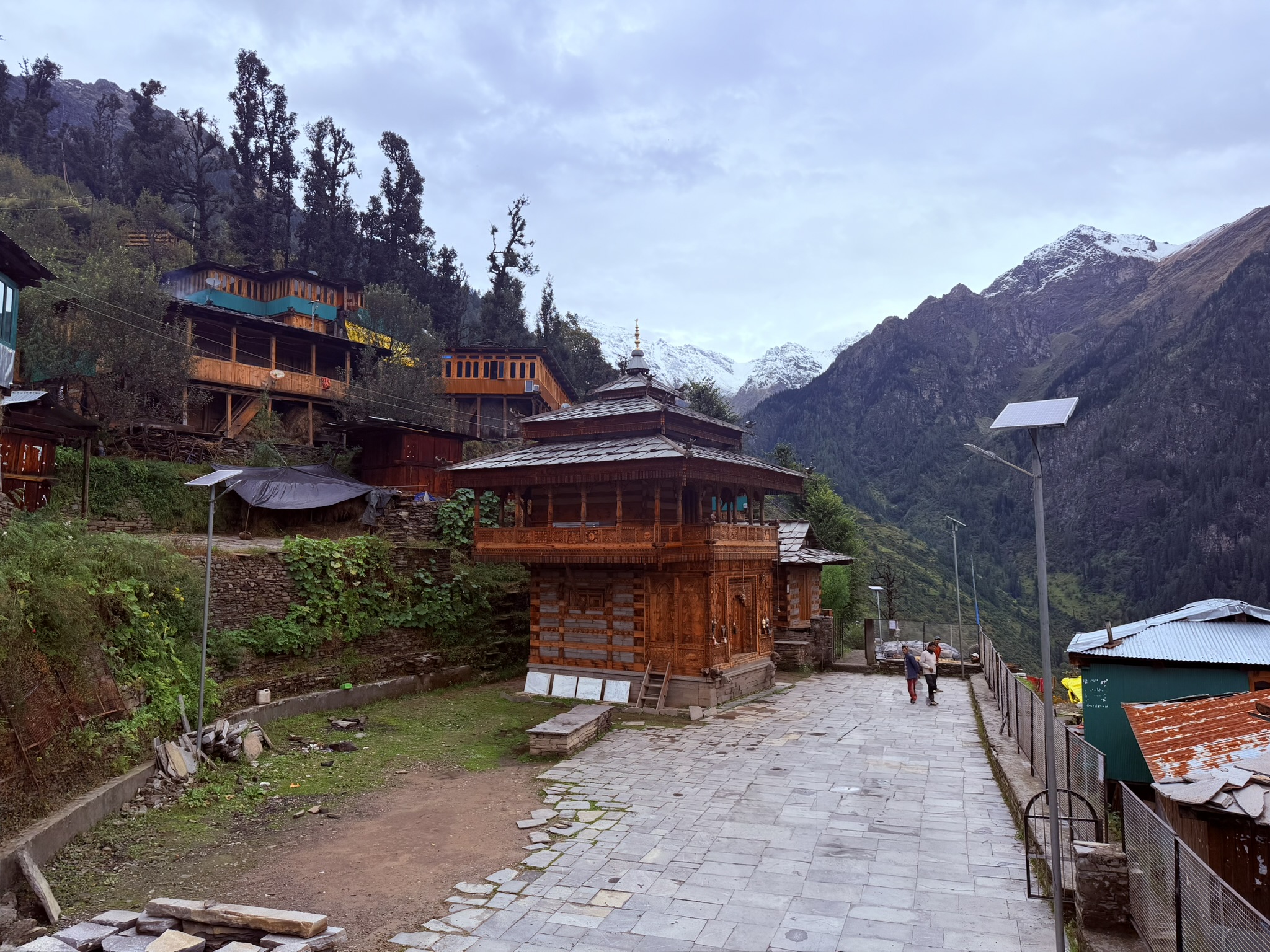
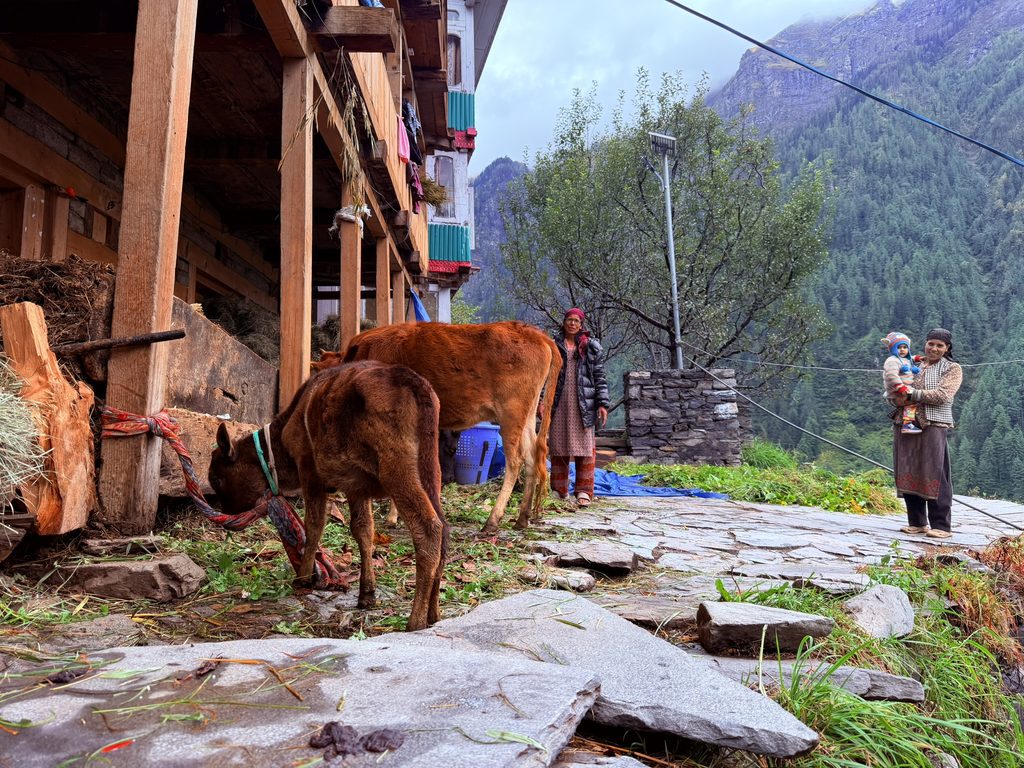
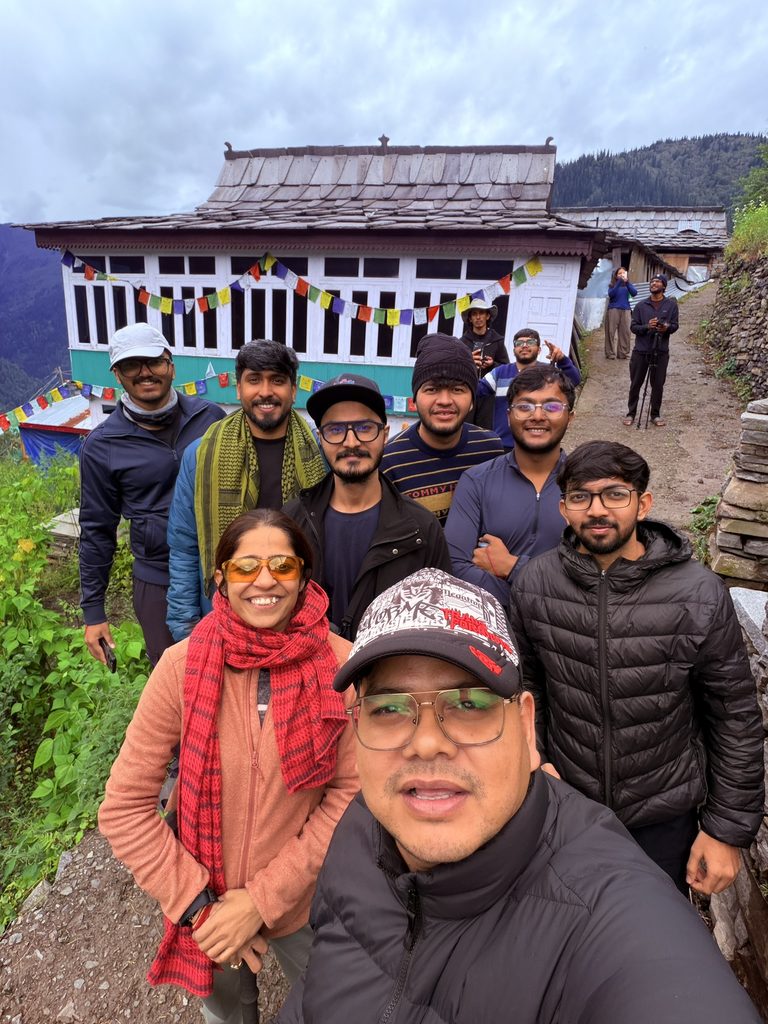
We listened to stories about the village and its deity, admired the colourful houses, and enjoyed meeting the locals. Later, we had coffee at a small shop and returned to our accommodation.
These were lovely moments, but uncertainty hung over everything.
Six members of our group had decided not to continue. We were hearing that the summit might be inaccessible, but the guides remained vague about the situation.
I understand that mountain weather is unpredictable and that safety must come first. No trekking operator can guarantee a summit.
What bothered me was the communication gap. We had paid for a particular itinerary, but the plan being followed locally was different, and we were left trying to understand what would happen next.
The Push to Dhanderas Thatch
On 29 September, we were told that we would proceed to Dhanderas Thatch.
The original plan, as we understood it, allowed two days for this section. Instead, after losing a day in Jakha, we were expected to cover it in one.
We started around 9:30–10 AM with packed lunches. It was a demanding walk of approximately 10 kilometres, with substantial elevation gain and several narrow, risky sections.
We encountered herds of sheep moving through the mountains. Seasonal livestock movement is part of life in these regions, and the animals were using the same trails as us. Loose stones tumbled down as they passed, so we had to remain alert and watch every step.
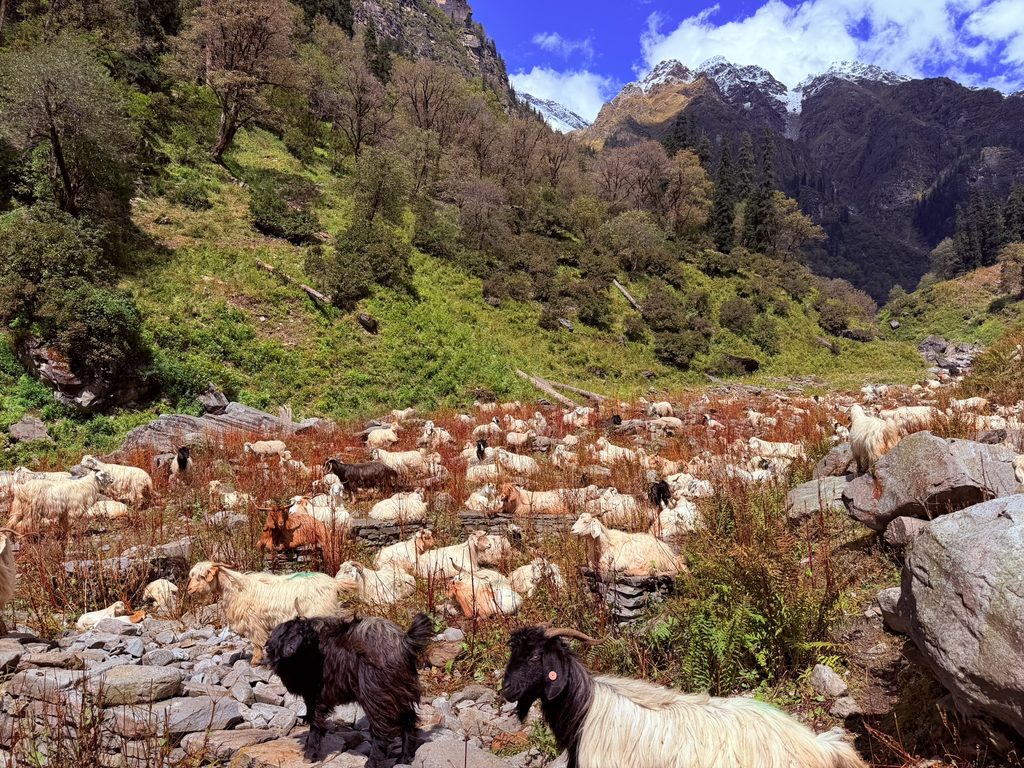
The climb was exhausting. By late afternoon, we were still approaching the campsite when the weather turned again.
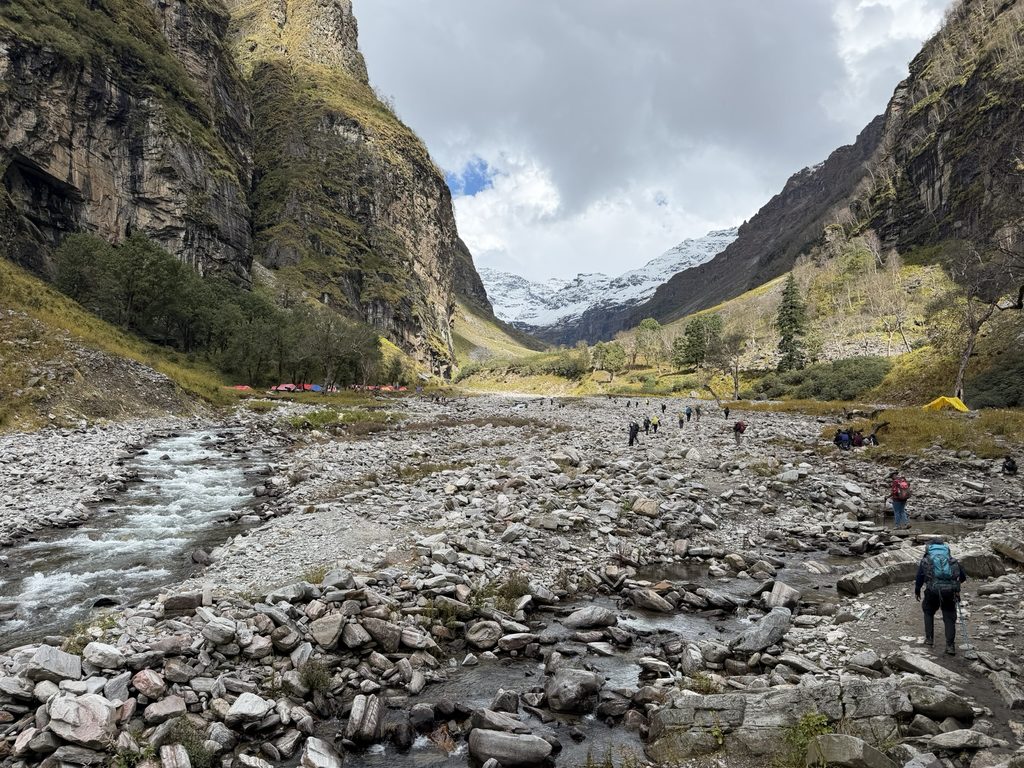
The Hailstorm on Rupin Pass Trek Experience
Around 4–5 PM, when we were perhaps 400–500 metres from camp, small pellets of ice began falling from the sky.
The hail hit my hands, and the conditions became increasingly uncomfortable. I managed to get my raincoat out, but the final stretch was difficult.
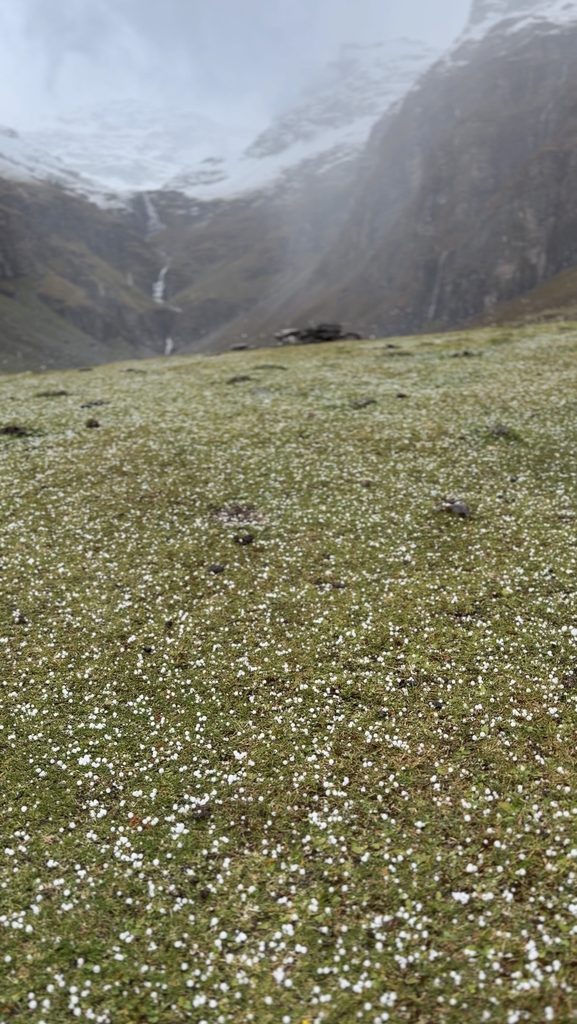
We were still below the summit, yet the weather was already severe enough to make us struggle. I could not stop thinking about what conditions must be like much higher up. The weather would ultimately change the course of my Rupin Pass Trek Experience.
We eventually reached the campsite, freezing and exhausted. I changed into every warm layer I had and headed towards the kitchen area for tea and a light snack.
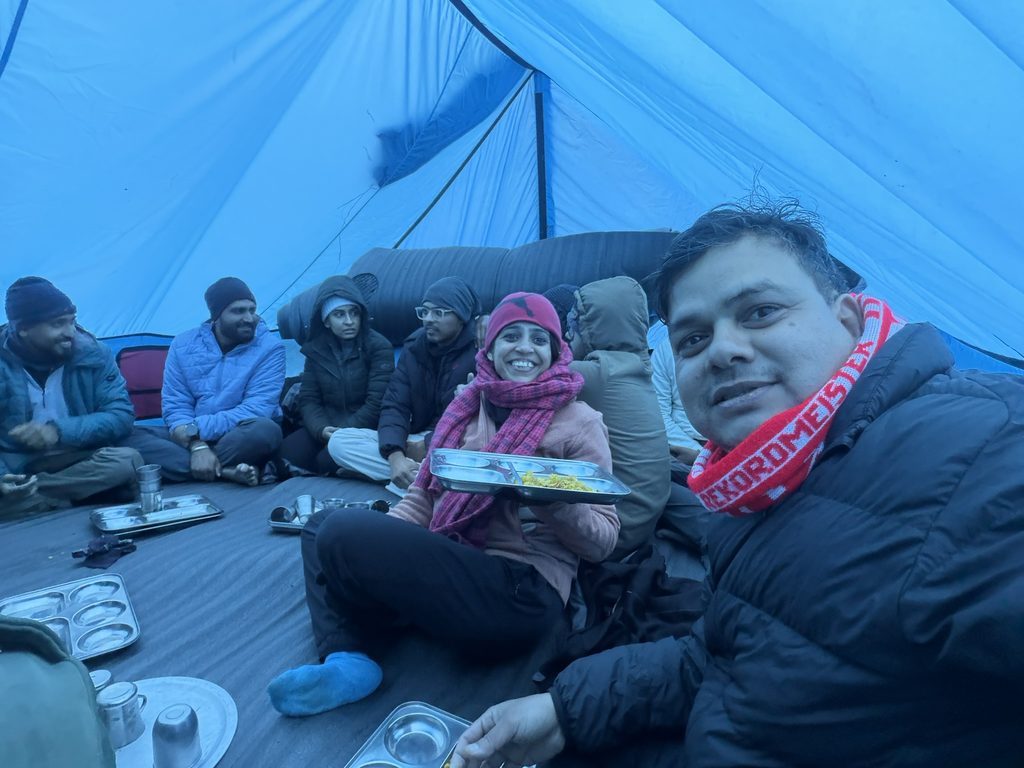
There was no electricity, and the cold made staying inside our tents the most appealing option. A few of us spent the evening chatting, trying to make sense of the situation.
People had come from different corners of India, including Gujarat, Pune, and Assam. Despite our different backgrounds, we all had the same question.
Were we actually going to attempt Rupin Pass, or had we come all this way only to turn back?
The guides continued to suggest that the weather might improve. But after the rain and hail we had experienced, I was beginning to lose hope.
That night, after dinner, we stepped outside and saw the sky had cleared. The snow-covered mountains glowed against the darkness, their white slopes almost appearing illuminated.
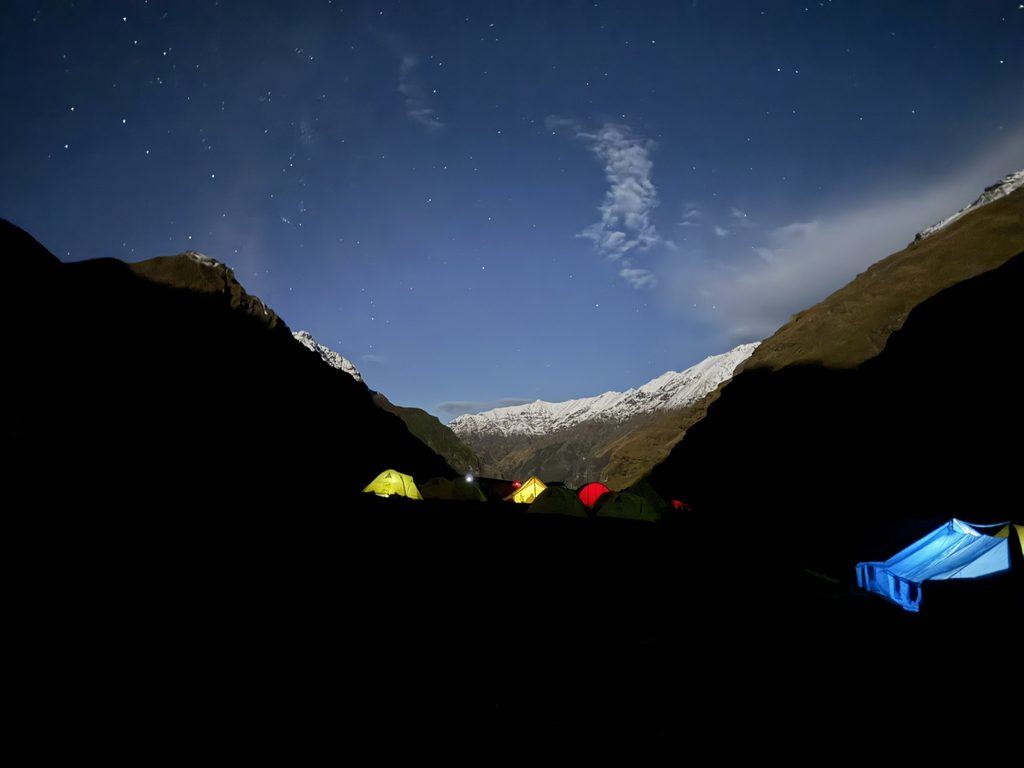
It was one of the most beautiful sights of the trip.
For a moment, the frustration faded. We stood looking at the mountains, appreciating their beauty and hoping that the morning might bring better news.
We shared a tent meant for three, with just two of us inside. I slept in my sleeping bag wearing almost all my warm clothes.
It was cold, but I managed to sleep reasonably well.
Bad Weather and the Missed Rupin Pass Summit
The morning of 30 September began with black tea and another round of hope. I walked around the campsite, took some photographs, and looked at the surrounding mountains.
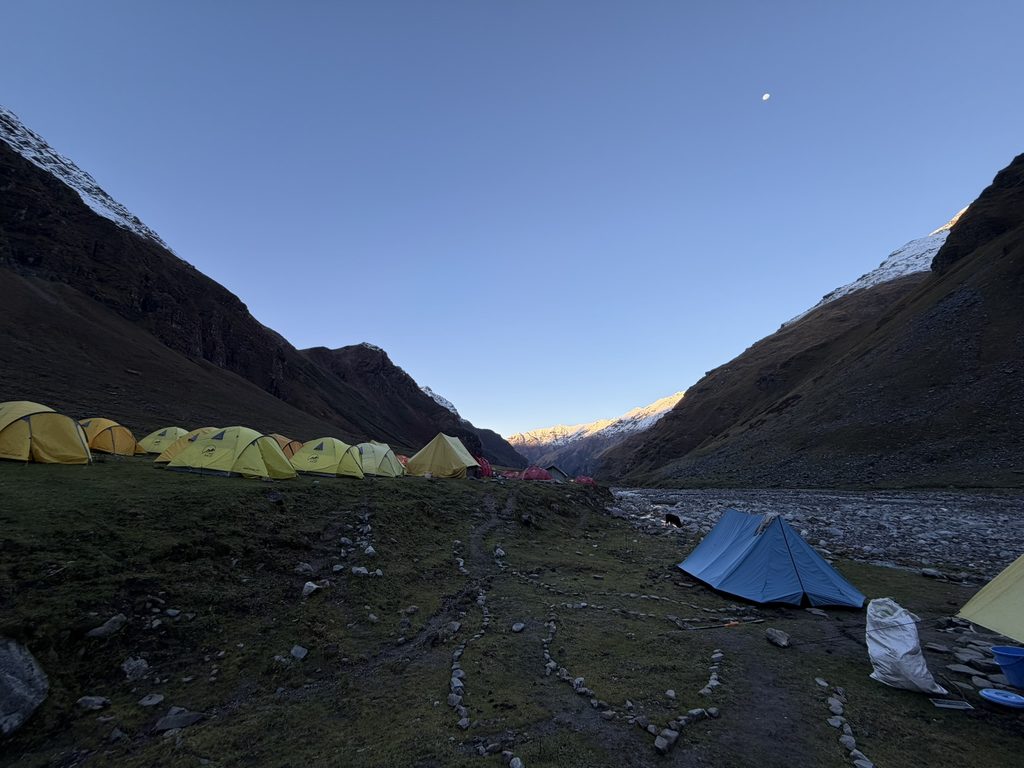
Then came the announcement we had been dreading.
We were not going to the summit. We were turning back.
I was disappointed, naturally. We had travelled all the way from Delhi, carried heavy backpacks through difficult terrain, and pushed ourselves physically to reach this point during our Rupin Pass Trek Experience.
But I also knew that mountain weather does not negotiate. A summit is never worth risking lives for, and turning back when conditions are unsafe is the right decision.
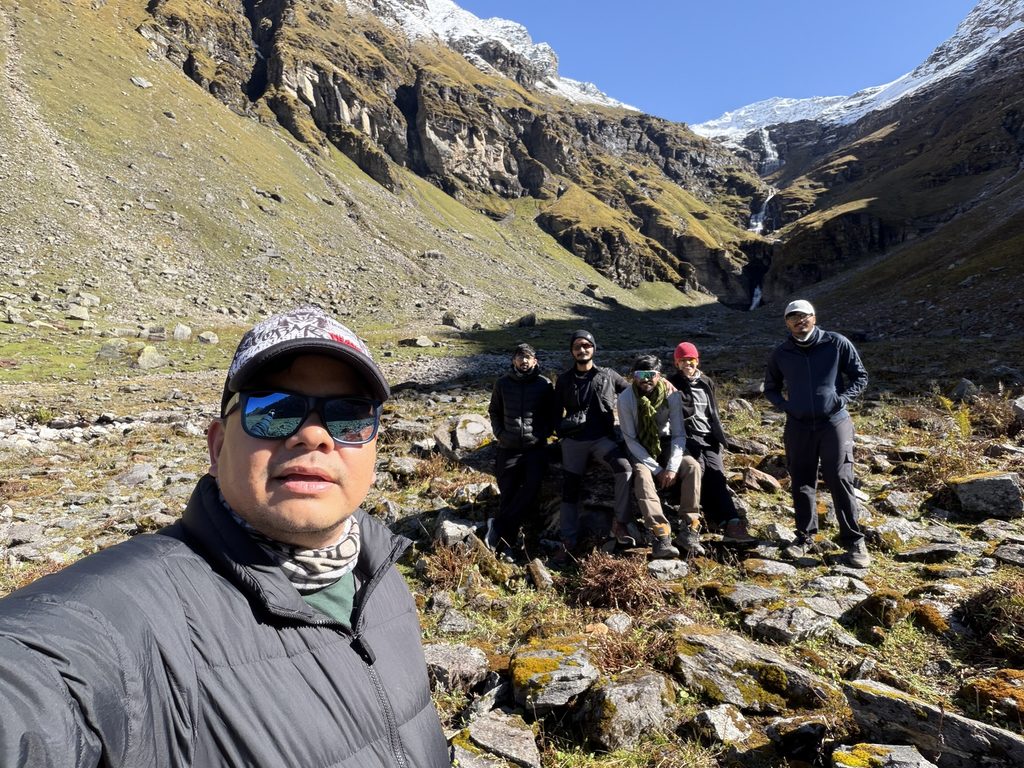
What made the experience frustrating was how the situation had been managed. We had spent an extra day in Jakha without clear communication, then completed a difficult climb to Dhanderas Thatch, only to be told the following morning that we would return.
We were given the option of walking directly back to Jiskun, a distance of approximately 13–14 kilometres, or returning to Jakha and continuing the next day.
We chose Jakha. Our bodies were exhausted after the previous day’s climb, and another long stretch in one go felt like too much.
We reached Jakha around 4–4:30 PM, expecting to stay overnight.
Instead, at around 5 PM, we were told that everyone had to continue down to Jiskun that evening.
I nearly got into an argument with one of the local guides, but eventually gave up. I felt that our concerns were not being heard, and arguing was unlikely to change the decision.
We continued walking, with aching feet, sore backs, and heavy backpacks. As darkness fell, we used our torches to negotiate sections of the trail.

We finally reached Jiskun around 8:30 PM, among the last four people from our group.
I was too exhausted to argue or even offer feedback. I just wanted to put my bag down.
A Cup of Tea and a Small Gesture of Kindness
A few of the younger trekkers we had befriended were waiting for us with tea.
They were perhaps half my age, but we had connected during the trek. After such a difficult day, that simple gesture meant a lot. Someone had noticed we were missing, waited for us, and thought about how we might be feeling.
We dropped our bags and joined them for tea around 8–8:30 PM.
A couple of people apologised for the way we had been treated. I appreciated the gesture, although by then I was too tired to feel that it changed much.
We had dinner and were told that we would return to Shimla the following day.
Our trek was over.
Not in the way we had imagined, but over nonetheless.
The Return Journey of Rupin Pass Trek Experience: One Last Test of Patience
On 1 October, we were scheduled to return to Shimla. I had originally booked a bus from Shimla to Delhi for that evening, but cancelled it after being told we would not make it back in time.
Now we were returning earlier than expected.
After breakfast, we waited for the tempo traveller, which finally arrived around 10–10:30 AM. Getting everyone and their luggage into the crowded vehicle was chaotic, but eventually we were on our way.
The day was beautiful. The sky was clear, and the snow-covered mountains looked magnificent. I thought we could finally enjoy the drive without any more surprises.
From around 10 AM until 3 PM, however, the driver did not stop for a proper meal break. When we eventually stopped, the family running the food establishment was cooking that day, and serving our group took nearly two hours.
After lunch, the driver refused to stop again, even when people asked for toilet breaks or a few minutes to stretch their legs.
We finally reached Shimla around 9 PM.
I stepped out feeling angry, exhausted, and relieved that the journey was almost over. I took a cab straight to the bus station and began looking for a way back to Delhi.
It was a long weekend, and finding a last-minute bus seemed nearly impossible. After trying several options, we were fortunate to find a bus arriving from another location with seats still available.
We jumped aboard.
For the first half an hour or so, I barely spoke. I was simply thinking about the previous few days and wondering how an adventure I had looked forward to so much had turned out this way.
By the morning of 2 October, we were back in Delhi.
Finally, home.
What I Learned About Choosing a Trekking Company
Having worked in the travel industry for many years, this experience made me look at adventure travel from a different perspective.
I understand that weather can change, routes can become unsafe, and itineraries sometimes need to be abandoned. The missed summit was disappointing, but I cannot blame an operator for conditions beyond its control.
My frustration was with the communication, coordination, and lack of consideration we experienced along the way.
We booked through one company but were handled by another. We expected around 16 trekkers but found ourselves in a group of 28. The itinerary being followed locally differed from what we understood we had booked, and clear updates about the weather and our options were often missing.
We also observed groups from operators such as Indiahikes and Trek The Himalayas. From what we could see, their arrangements appeared more organised, with multiple guides, walkie-talkies, and coordination between guides supporting trekkers walking at different speeds.
That contrast made me reconsider how I would choose a trekking company in the future.
I would rather pay a little more for a well-organised trekking experience than save money and compromise on communication, coordination, and support.
Before booking another trek, I would pay much closer attention to the actual operator conducting it, group size, guide-to-trekker arrangements, emergency procedures, accommodation, and what happens when the weather forces a change of plans.
Adventure comes with uncertainty. Poor communication should not have to be part of the package.
What My Rupin Pass Trek Experience Taught Me
I have asked myself this question more than once since returning home.
We did not reach the summit or complete the route as planned. The experience fell short of what I had imagined, and I was genuinely disappointed.
Looking back, my Rupin Pass Trek Experience was not the summit story I had hoped to write, but it was still a journey worth remembering.
For one thing, I learned a great deal about my own physical capabilities. I had never carried a 15–20 kg backpack over such demanding terrain for consecutive days. The muddy trails, steep climbs, slippery descents, and cold nights tested me in ways I had not experienced before.
I now have a better understanding of what my body can handle and what I need to improve before attempting another demanding trek.
The journey also introduced me to some wonderful people and gave me moments I will remember for a long time: clouds brushing against mountain slopes, colourful village houses, conversations with locals, and the snow-covered mountains glowing under a clear night sky.
And I will always remember those fellow trekkers who waited for us with tea when we finally returned to Jiskun.
A beautiful view can make you pause. A kind person can make you feel better about an entire day.
Final Thoughts: Not Every Adventure Ends at the Summit
Rupin Pass was supposed to be a six-night Himalayan adventure. Instead, it became a journey of difficult trails, changing weather, missed expectations, and lessons I had not anticipated.
I am disappointed that we missed the summit. I am unhappy with how parts of the experience were managed. And I would certainly make different choices when selecting a trekking operator next time.
But I am also glad I went.
I discovered what my body could do, experienced the raw beauty of the Himalayas, and met people who made difficult days a little easier.
Most importantly, the trip reminded me that not everything in life can be planned, negotiated, or controlled.
We prepare, we make plans, and we imagine how a journey will unfold. Then life happens. Sometimes the weather changes. Sometimes people let us down. Sometimes the destination remains just out of reach.
We can either remain frustrated about what did not happen or accept the situation, learn from it, and move forward.
I went to Rupin Pass hoping to cross a mountain pass. I returned without reaching the summit, but with a better understanding of my limits, some beautiful memories, unexpected friendships, and a reminder that life does not always follow the itinerary.
Not every adventure ends at the summit. Sometimes, the journey is about learning when to push forward, when to turn back, and how to move on.
And that is what I will carry with me from Rupin Pass.
— CycloFoodie